 English
 Pусский
 Español
Low Voltage Switchgear Parameters for Manufacturing Plant Power Distribution

 by changan electric
You're designing a power distribution system for a new manufacturing plant — or upgrading an existing one. The loads are diverse: large motors, welding equipment, HVAC, lighting, and sensitive electronics. The switchgear you specify will carry that load for decades. Get the parameters wrong, and you'll face nuisance trips, overheating, or worse, a catastrophic failure.
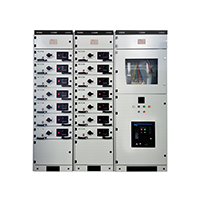
Low voltage switchgear is the backbone of any industrial power distribution system. The CAMNS low voltage withdrawable switchgear from Changan Electric is designed for AC 50-60Hz, 400V systems, conforming to IEC439 and GB/T7251.1 standards. It uses standard module design and can form protection, operation, conversion control, regulation, and indication units. This guide walks through the key parameters you need to understand — rated voltage, current, short-time withstand, forms of separation, and temperature rise — so you can specify switchgear that matches your plant's needs.
Voltage parameters — the foundation
Voltage parameters determine the electrical compatibility of your switchgear with the rest of your system. Two specifications matter most.
400V, 480V, 690V — match it to your system
The CAMNS switchgear is rated for 400V AC operational voltage at 50/60Hz. This covers the standard low-voltage distribution levels found in most North American and international manufacturing facilities — 480V, 600V, and 690V systems. For plants running 690V motors or equipment, verify that the switchgear's rated operational voltage matches your system voltage.
690V insulation — your safety margin
The insulation voltage must exceed the maximum system voltage to provide adequate safety margin. The CAMNS switchgear has a rated insulation voltage of 690V. This means the insulation system can withstand voltages up to 690V without breakdown, providing a safety margin above the 400V operational voltage.
8kV impulse withstand — protection from the unexpected
The CAMNS switchgear has a rated impulse withstand voltage of 8kV. This parameter reflects the switchgear's ability to withstand voltage surges from lightning strikes or switching transients. For facilities in areas with high lightning activity or with sensitive electronic loads, this rating is critical for protecting downstream equipment.
Current capacity — how much can it actually handle?
Current capacity determines how much load the switchgear can serve. Understanding the difference between main bus and distribution bus ratings is essential.
6300A on the main bus — the backbone
The CAMNS switchgear's main busbar is rated up to 6300A. This is the total current the switchgear can carry from the incoming supply to the distribution sections. For a large manufacturing plant with multiple production lines, this capacity covers the full range of industrial loads.
1300A on distribution — feeding the loads
The distribution bus, which feeds individual outgoing circuits, is rated up to 1300A. This rating determines how much current can be drawn from each section of the switchgear. For motor control centers feeding large motors, verify that the distribution bus capacity matches your connected load.
Altitude and heat — when to derate
The CAMNS switchgear is rated for installation at altitudes up to 2000m and ambient temperatures from -15°C to +40°C. For installations above 2000m or in high-temperature environments, derating may be required. In such cases, consult the manufacturer for specific derating curves.
Fault tolerance — what happens when something goes wrong
Short-time withstand current is the maximum fault current the switchgear can carry for one second without sustaining damage. This is one of the most critical safety parameters.
100kA withstand — main bus fault tolerance
The CAMNS main bus has a rated short-time withstand current of up to 100kA. This means the switchgear can withstand a fault current of 100,000 amps for one second without failing. For most industrial facilities supplied by medium-voltage transformers, this rating provides adequate protection.
50kA withstand — distribution bus protection
The distribution bus is rated for short-time withstand current up to 50kA. This lower rating reflects the reduced fault current available at downstream distribution points. The coordination between the main and distribution bus ratings ensures that the switchgear provides selective protection.
220kA peak — the first half-cycle matters
The peak withstand current is 2.2 times the short-time withstand current for 50Hz systems. The CAMNS switchgear has a peak withstand current of up to 220kA on the main bus and 105kA on the distribution bus. This rating reflects the switchgear's ability to withstand the mechanical and thermal stresses of the first half-cycle of a fault current.
The wrong Icw rating can be catastrophic
The fault current available at your switchgear depends on your transformer size and impedance. A 2000kVA transformer with 5.75% impedance delivers approximately 50kA of fault current at 480V. If your switchgear's Icw rating is lower than the available fault current, the switchgear could fail catastrophically during a fault. Always calculate your available fault current and specify switchgear with an Icw rating that exceeds it.
Separation forms — safety when you open the door
Forms of separation define how the internal compartments of the switchgear are divided. This affects both safety during maintenance and the ability to work on one section while others remain energized.
no barriers, no protection
Form 1 switchgear has no internal separation between the busbars, functional units, and terminals. This is suitable only for small, non-critical loads where maintenance can be performed with the entire switchgear de-energized.
busbars are isolated
Form 2 provides separation between the main busbars and the functional units. This is common in light industrial applications where some level of safety during maintenance is required.
terminals get their own space
Form 3 adds separation between the terminals of different functional units. This allows maintenance on one circuit while others remain energized, making it suitable for facilities that cannot afford complete shutdowns.
every unit in its own room
Form 4b provides the highest level of separation, with each functional unit in its own individual compartment with separate doors. This is essential for metallurgical plants, chemical facilities, and other high-safety environments where personnel protection is paramount. The CAMNS switchgear's modular design can be configured to meet various form of separation requirements.
.jpg)
Temperature — the silent killer of switchgear
Temperature rise affects the lifespan of switchgear components. Excessive heat accelerates insulation aging and increases the risk of failure.
70K rise at 40°C — the IEC limit
Under IEC 61439 standards, the temperature rise for copper busbars is limited to 70K above a 40°C ambient temperature. This means the busbar temperature should not exceed 110°C under normal operating conditions.
Heat kills switchgear — monitor it
Overloaded circuits, loose connections, and high ambient temperatures can all cause excessive temperature rise. The CAMNS switchgear can be specified with temperature monitoring options to track hot spots at critical connection points.
Humidity, earthquakes, and other realities
The CAMNS switchgear is designed for indoor installation with ambient temperatures from -15°C to +40°C, average daily relative humidity up to 95%, and earthquake intensity up to 8 degrees. For installations outside these conditions, consult the manufacturer for special configurations.
Matching the switchgear to your plant
Different manufacturing facilities have different requirements. Here's how to match switchgear parameters to your plant type.
Automotive — high current, high fault tolerance. With numerous welding robots, conveyor systems, and paint shop equipment, the switchgear must handle frequent motor starts and high fault currents. The CAMNS switchgear's modular design allows for up to 36 feeder circuits per cabinet, accommodating the dense load distribution of an automotive plant.
Food and beverage — washdowns and corrosion. These facilities require corrosion-resistant coatings and anti-condensation heaters. The high humidity and frequent washdowns demand additional protection. The CAMNS switchgear's standard enclosure provides IP40 protection, with options for higher ratings available.
Data centers — redundancy is everything. Data centers require high reliability and redundant feeder configurations. The withdrawable design of the CAMNS switchgear allows for quick replacement of faulty units without de-energizing the entire switchgear, minimizing downtime for critical loads.
Metallurgical and chemical — Form 4b essential. These environments demand high short-time withstand ratings and Form 4b separation. The CAMNS switchgear is widely used in these environments, with proven reliability in harsh conditions.
Get these numbers right before you order
Before you place your switchgear order, confirm these critical parameters:
-
Know your fault current first. Calculate your system short-circuit capacity (kA) — determines the required Icw rating.
-
Motor starting — the biggest load you'll switch. Confirm maximum motor power and starting method — affects the required distribution bus rating.
-
Drawer units — plug and play maintenance. Determine if you need withdrawable units — the CAMNS switchgear offers drawer-type units for quick replacement.
-
How hot is it where the switchgear sits? Check the site maximum ambient temperature — affects derating requirements.
-
What form of separation do you need? Define the required form of separation — determines maintenance safety and flexibility.
-
How much space do you have? Measure your installation space — the CAMNS switchgear can be arranged back-to-back or against the wall to save space.
Questions engineers always ask
Q: Icw vs. Icu — what's the difference?
A: Icw (short-time withstand current) is the fault current the switchgear can tolerate for one second without damage. Icu (rated ultimate short-circuit breaking capacity) is the fault current the circuit breaker can interrupt. Icw applies to the switchgear as a whole; Icu applies to individual circuit breakers. Both must be coordinated for proper protection.
Q: Form 2 to Form 4 — can you upgrade?
A: Typically no. Form of separation is determined by the physical construction of the switchgear — the placement of barriers, doors, and compartments. Upgrading from Form 2 to Form 4 generally requires replacing the switchgear enclosure. The CAMNS switchgear's modular design allows you to specify the required form at the time of ordering.
Q: Temperature rise — how to verify it?
A: Request the manufacturer's type test report. The CAMNS switchgear conforms to IEC439 and GB/T7251.1 standards, which require type testing to verify temperature rise limits. For critical applications, consider specifying thermography as part of your commissioning process.
Q: How many circuits fit in one cabinet?
A: Up to 36 feeder circuits can be assembled for each cabinet. This density makes the CAMNS switchgear suitable for applications with high circuit counts in limited floor space.
How Changan Electric supports your power distribution needs
Changan Electric has been manufacturing electrical equipment since 1987, with a facility in the Yueqing Economic Development Zone. The CAMNS low voltage withdrawable switchgear is designed for AC 50-60Hz, 400V systems, conforming to IEC439 and GB/T7251.1 standards. It uses standard module design and can form protection, operation, conversion control, regulation, and indication units.
The switchgear features over 200 types of assembly parts that can form frame structures of different schemes, and form fixed separation or drawer units. The operation of the drawer is combined with the control handle, simplifying operation compared to traditional MNS cabinets. The product has passed aseismic, salt fog, and EMC electromagnetic compatibility tests.
Before you specify switchgear for your manufacturing plant, calculate your available fault current, define your circuit count requirements, and determine your required form of separation. The CAMNS switchgear's modular design and flexible configuration options allow you to match the switchgear to your specific plant needs.
Need help selecting the right low voltage switchgear for your manufacturing plant? Contact Changan Electric for a consultation or to request a switchgear selection guide. Share your system voltage, fault current calculation, and circuit count requirements — their engineering team can recommend the right CAMNS configuration for your specific application.