 English
 Pусский
 Español
Voltage Vacuum Circuit Breaker Fails to Close – Troubleshooting Checklist

 by changan electric
You press the close button. Nothing happens. Or the breaker closes for a split second and immediately trips open. The control panel shows no obvious fault. Your team starts checking fuses, swapping relays, and scratching their heads. An hour passes. Production is waiting.
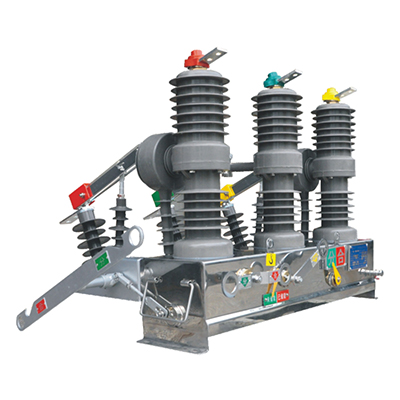
A voltage vacuum circuit breaker that refuses to close is one of the most frustrating faults in medium-voltage switchgear. The ZW32‑12 outdoor vacuum circuit breaker from Changan Electric is a three‑phase AC 50Hz outdoor distribution device rated for 12kV, 630A, with a short‑circuit breaking capacity of 20kA. It features a compact, long‑life structure with high and low temperature resistance, UV resistance, and minimal maintenance requirements. But even the best equipment can develop closing issues. This checklist organizes troubleshooting by probability—from the most common causes to the less frequent ones—so you can find the problem fast.
First — check the spring charging status
Before you look at anything else, verify that the closing spring is charged. A breaker that isn't spring‑charged can't close—no matter how many times you press the button.
Listen for the motor sound
When the control power is applied, the spring charging motor should run until the spring is fully charged. If you don't hear the motor running, start there. Check the motor power supply, the motor fuse, and the control circuit breaker that feeds the motor circuit. A tripped miniature circuit breaker or a blown fuse is a quick fix that's often overlooked.
Manual charging handle test
Every ZW32‑12 breaker has a manual charging handle on the operating mechanism. Insert the handle and pump it to charge the spring manually. If the breaker charges manually but the motor doesn't charge it electrically, the problem is in the motor circuit—not the mechanism. If the breaker won't charge even manually, the issue is mechanical: a stuck gear train or a seized bearing in the charging mechanism.
The microswitch that signals "spring charged"
A small microswitch on the mechanism tells the control system when the spring is fully charged. If this switch fails—contacts welded open or closed—the motor may run continuously (if the switch won't close to stop it) or never run at all (if the switch won't close to start it). With the breaker de‑energized and the control circuit isolated, check continuity across this microswitch. Replace it if it's faulty.
Second — measure control voltage at the closing coil
The closing coil needs proper voltage to pull the latch and release the spring. If the voltage is too low, the coil won't generate enough force.
The 85% rule
For DC control circuits—typical in switchgear—the closing coil must receive at least 85% of its rated voltage to operate reliably. If the voltage drops below this threshold, the coil's magnetic force is insufficient to trip the latch. The result: you hear a faint "click" as the coil energizes, but the breaker doesn't close.
Measure the voltage at the closing coil terminals when the close button is pressed. If it's below 85% of rated (e.g., below 187V on a 220V DC system), trace back to the control power source. Check for voltage drops across long cable runs, undersized wiring, or weak batteries.
Check the control circuit fuse or miniature circuit breaker
The closing coil control circuit is usually protected by a fuse or a miniature circuit breaker. These devices can trip or blow without any visible indication. Use a multimeter to check continuity—don't rely on visual inspection alone. A blown fuse is often the simplest cause of a failed close.
Loose terminal on the closing coil
Vibration from normal operation—especially on outdoor pole‑mounted breakers like the ZW32‑12—can loosen terminal connections over time. A loose terminal creates high resistance, which reduces the voltage reaching the coil. Check both the coil's power supply terminal and its return terminal. Tighten any loose connections.
Third — anti‑pumping relay interference
The anti‑pumping relay (often labeled K0) prevents the breaker from "pumping"—repeatedly closing and opening—if a sustained close command is applied. When this relay fails or sticks, it can block the closing circuit entirely.
What the anti‑pumping relay does
The K0 relay is wired in series with the closing coil. After a close command is executed and the breaker closes, the relay latches and opens its contact in the close circuit. This prevents a second close command from being executed until the first command is removed and the relay resets. It's a critical protection feature that prevents mechanical damage from repeated close‑open cycles.
The symptom: a momentary close that immediately trips
If the anti‑pumping relay is stuck in the latched position, the close circuit is open—nothing happens when you press the button. If the relay is intermittent, you may see the breaker close momentarily and then immediately trip open, followed by a complete inability to close again. This is the classic "close‑open‑lockout" pattern.
How to reset the anti‑pumping relay
The K0 relay resets when the close command signal is removed. If the close button is stuck or the control circuit is holding the close command, the relay won't reset. Release the close button and verify that the close command voltage drops to zero. Then re‑apply the close command. If the breaker closes normally, the anti‑pumping relay is working correctly and the problem was a sustained command. If the breaker still won't close, the relay contacts may be welded—replace the relay.
Fourth — mechanical interlock not released
Vacuum circuit breakers have multiple mechanical interlocks that prevent closing unless certain conditions are met. These interlocks are safety features—but they can also prevent closing when a condition isn't satisfied.
Truck position — test vs. connected
On drawout switchgear, the breaker can only close when it's in the "connected" or "test" position, depending on the interlock design. If the breaker is partially racked or in the wrong position, the interlock blocks the closing mechanism. Verify the position indicator on the breaker chassis. If it's not showing "connected" or "test" as required, rack the breaker to the correct position.
Ground switch status
On outdoor breakers like the ZW32‑12, a ground switch interlock prevents closing if the ground switch is closed. This is a critical safety feature—closing a breaker onto a grounded line would create a bolted fault. Check the ground switch position indicator. If it's closed, open it before attempting to close the breaker. For the ZW32‑12, the three‑phase pillar structure and fully enclosed design ensure reliable operation in outdoor conditions, but the interlock must be respected.
Panel door interlock
Some switchgear designs include a door interlock that prevents closing if the panel door is open. Verify that the door is fully closed and that the interlock mechanism is engaged. If the door switch is faulty, the control system may think the door is open even when it's closed.
Below is a quick reference table for closing failure symptoms and likely causes:
| Symptom | Most Likely Cause | Check First |
|---|---|---|
| No sound, no movement when close button pressed | Spring not charged | Check motor power; try manual charge |
| Faint "click" but breaker doesn't close | Low control voltage (<85% of rated) | Measure voltage at closing coil terminals |
| Breaker closes then immediately trips open | Anti‑pumping relay stuck | Release close command; reset K0 relay |
| Nothing happens; control voltage present | Control circuit fuse or MCB tripped | Check continuity of fuse/MCB |
| Breaker won't close; position indicator shows "disconnected" | Truck position interlock | Rack breaker to connected position |
| Breaker won't close; ground switch indicator shows closed | Ground switch interlock | Open ground switch before closing |
Field diagnostic flow — follow the logic
Start with the most likely cause: spring not charged. If the motor runs but never stops, the spring‑charged microswitch is the problem. If the motor doesn't run, check the motor power supply—fuse, MCB, and motor itself. If the motor runs and stops (spring charges), but the breaker still won't close, measure the closing coil voltage. If voltage is present at the coil but the breaker won't close, the coil may be burned out—check coil resistance with an ohmmeter. If voltage is absent, trace back through the control circuit: check the anti‑pumping relay contacts, then the auxiliary switch contacts, and finally the close button and control switch.
If all electrical checks pass but the breaker still won't close, the problem is mechanical. Check the latch mechanism for wear or binding. On the ZW32‑12, the operating mechanism is enclosed in a sealed housing to protect against moisture, dust, and corrosion. But even sealed mechanisms can develop issues over time.
Temporary workaround vs. permanent fix
When you need to restore power quickly, a temporary workaround may be acceptable—but always follow up with a permanent repair.
Temporary: If the spring is charged and the control circuit is working, you can close the breaker manually using the manual close button or lever on the mechanism. This bypasses the electrical control circuit and allows the breaker to close. However, this doesn't fix the underlying problem—the next time the breaker trips, you'll face the same issue.
Permanent: Replace the faulty component—a burned‑out closing coil, a failed spring‑charging microswitch, a stuck anti‑pumping relay, or a worn latch mechanism. Keep spare parts on hand for the most common failure points. For the ZW32‑12, the compact structure and long lifespan make it a reliable choice, but like all mechanical devices, components do wear out.
Questions about vacuum circuit breaker closing failures
Q: Can a weak battery cause failure to close?
A: Yes. In DC control systems, a weak battery or failing charger can cause the control voltage to drop below the 85% threshold. The closing coil may energize but not produce enough force to trip the latch. Check the battery voltage at the control panel and at the breaker terminals—a voltage drop between the two points indicates undersized wiring or high‑resistance connections.
Q: What is "clutch slip" in the spring mechanism?
A: Clutch slip occurs when the one‑way clutch in the spring charging mechanism wears out. The motor runs, but the spring doesn't charge because the clutch fails to engage. The symptom: the motor runs continuously with no increase in spring tension. The fix: replace the clutch assembly or the entire charging mechanism.
Q: Will low vacuum level affect closing?
A: No—low vacuum in the interrupter affects the breaker's ability to interrupt fault current, but it does not prevent closing. A breaker with low vacuum will still close mechanically. However, it should be taken out of service immediately and the vacuum interrupter replaced. The ZW32‑12 uses a fully sealed, pillar‑type structure that maintains vacuum integrity for long service life, but vacuum monitoring is still recommended as part of routine maintenance.
Preventive measures
The best way to handle closing failures is to prevent them. Add these tasks to your maintenance schedule.
Semi‑annual: manual and electrical spring charge test. Charge the spring manually, then electrically. Verify that the motor stops at the correct point and that the spring‑charged indicator shows "charged." This simple test catches microswitch and motor issues before they cause a failure.
Semi‑annual: close/open operation test. Perform at least two close‑open operations from the control panel. Verify that the breaker closes and opens cleanly, with no hesitation or abnormal noise. If you have the equipment, record the closing coil current waveform—a waveform that deviates from baseline indicates coil degradation or increased mechanical resistance.
Annual: control voltage check. Measure the control voltage at the breaker terminals during a close operation. If the voltage drops more than 10% during the close pulse, the control circuit has excessive resistance or the power supply is undersized. Upgrade wiring or add a capacitor bank to support the close coil inrush current.
Annual: mechanical inspection. With the breaker de‑energized and the springs discharged, inspect the latch and roller contact surfaces. Look for wear, scoring, or flattening. The ZW32‑12 is designed for reliable operation in harsh outdoor environments, with resistance to high and low temperatures, UV, and aging. But even the most durable mechanism needs periodic inspection.
Changan Electric‘s ZW32‑12 outdoor vacuum circuit breaker is built for the demands of distribution networks—city grids, rural electrification, and industrial facilities. Its maintenance‑free design, compact structure, and reliable vacuum interrupter make it a workhorse of medium‑voltage distribution. But no breaker is immune to control circuit issues. A systematic approach to troubleshooting—starting with spring charge, then control voltage, then anti‑pumping relay, and finally interlocks—will get your breaker back in service faster.
Dealing with a vacuum circuit breaker that won‘t close? Contact Changan Electric for technical support or product information on the ZW32‑12 series. Share your breaker model, control voltage, and the fault symptom—their team can help identify the root cause and recommend replacement components.