 English
 Pусский
 Español
Repeated Tripping in LV Panel – Step-by-Step Diagnostic Approach

 by changan electric
The same molded case circuit breaker trips again and again. You reset it, it holds for a while, then it trips again. This is one of the most common—and most frustrating—problems in low-voltage panel maintenance. The cause could be an overload, a short circuit, a ground fault, or something more intermittent.
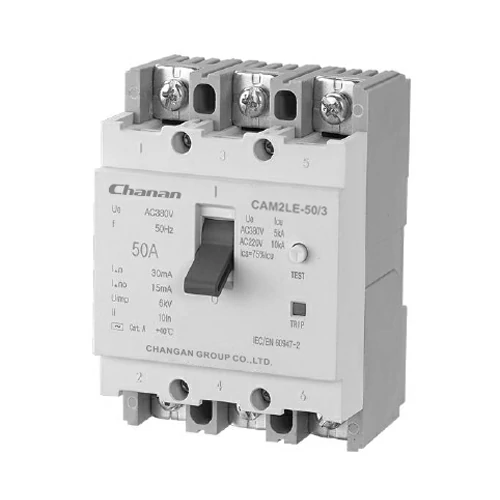
A Molded Case Circuit Breaker-MCCB is designed to protect circuits and equipment, but when it trips repeatedly, it’s telling you something specific. The diagnostic approach depends on what the breaker shows you. This guide walks through a systematic diagnostic sequence—starting with the trip indication on the breaker itself, then moving through overload, short circuit, and intermittent fault scenarios. For plant electricians and facility maintenance technicians, this is a practical framework for getting to the bottom of repeated tripping. Chang'an Electric manufactures a range of MCCBs including the CAM2LE-50 Earth Leakage Circuit Breakers, designed for reliable protection with an ampere frame size of 50AF, rated current from 5A to 50A, and rated voltage of 220/415V.
Read the Trip Indication First
Before you touch anything, read the breaker. Modern MCCBs have visual indicators that tell you what kind of trip occurred.
Thermal (Overload) Trip
A thermal trip is usually indicated by a red flag or a “thermal” marking on the breaker face. This means the breaker tripped because the current exceeded the rated capacity for an extended period. The CAM2LE-50 series is calibrated at 40°C, with compensation coefficients that adjust for ambient temperature. If you see a thermal indication, you’re dealing with an overload—not a short circuit.
Magnetic (Short-Circuit) Trip
A magnetic trip is instantaneous. The breaker trips the moment a short circuit occurs. The indication is typically a quick flash or a specific flag position. For the CAM2LE-50, the ultimate breaking capability (Icu) is rated at 5kA at 220V and 2.5kA at 415V. If the trip is magnetic, you’re looking for a short circuit somewhere downstream.
Ground Fault Trip
If the breaker has a ground fault module, it will have a separate indication for ground fault trips. The CAM2LE-50 is an Earth Leakage Circuit Breaker (ELCB) that detects small stray voltages and interrupts the circuit if a dangerous voltage is detected. A ground fault trip means current is leaking to ground—often through damaged insulation or moisture.
If Thermal Trip — Look for Overload
If the breaker shows a thermal trip indication, the problem is almost certainly overload. Here’s how to diagnose and fix it.
Measure Load Current with a Clamp Meter
Clamp the meter around each phase of the circuit. Compare the reading to the breaker’s rated current. The CAM2LE-50 is available in ratings from 5A to 50A. If the measured current exceeds the breaker rating, the circuit is overloaded. The solution is to reduce the load or redistribute it across multiple circuits.
Check for Harmonic Heating
Harmonics from variable frequency drives (VFDs) and other non-linear loads can cause excessive neutral current. This current doesn’t show up as phase overload but creates heat in the breaker and wiring. Measure the neutral current with a clamp meter. If it’s high, consider adding a harmonic filter or derating the breaker.
Loose Connection Causing Heat
A loose connection generates heat, which can trip a thermal breaker even when the load current is within limits. Use a thermal camera to scan all terminals. A temperature difference of more than 15°C between similar connections indicates a problem. Tighten all connections to the manufacturer’s specified torque.
Solution — Redistribute or Adjust
Once you’ve identified the cause, take corrective action. Redistribute loads to reduce current on the affected circuit. If the breaker has adjustable overload protection, adjust the setting to match the actual load—but never exceed the circuit’s capacity. The CAM2LE-50 series has a temperature compensation table that adjusts for ambient conditions, but the fundamental protection level is still based on the rated current.
If Magnetic Trip — Investigate Short Circuit
A magnetic trip means a short circuit. The breaker trips instantly, and the fault is usually severe.
Downstream Cable Damage
Cable insulation can be damaged by heat, mechanical abrasion, or rodents. The damage creates a path for current to flow between phases or from phase to ground. Perform an insulation resistance test on the downstream cables. A reading below 1 MΩ indicates insulation breakdown.
Motor Winding Failure
If the circuit feeds a motor, winding failure is a common cause of short circuits. Measure the resistance between phases at the motor terminals. Imbalanced readings indicate a winding fault. A phase-to-phase short requires motor repair or replacement.
Accidental Phase-to-Phase Contact
Check junction boxes and termination points for loose wires that could touch each other. Vibration can cause conductors to shift and make contact. Open each junction box and inspect for signs of arcing or melted insulation.
Temporary Fix — Isolate and Test
If you can’t immediately find the fault, isolate the circuit by disconnecting loads one at a time. Reset the breaker and re-energize each segment until the breaker trips again. The segment that causes the trip is where the fault lies. This method is time-consuming but effective.
If Intermittent Tripping — The Hardest Diagnosis
Intermittent tripping is the most difficult to diagnose because the fault isn’t always present. Here’s how to approach it.
Vibration Loosening Connections
Vibration from nearby equipment can loosen terminal connections over time. A loose connection creates heat when current flows, and the breaker trips when the heat builds up. Tighten all terminals in the circuit—both at the breaker and at downstream connections.
Inrush Current from Large Motors
Large motors draw high inrush current when starting—typically 6-8 times the running current. If the breaker is sized too close to the running current, the inrush can trip it. Observe the starting current with a clamp meter that has an inrush function. If the inrush exceeds the breaker’s magnetic trip threshold, consider using a breaker with a higher short-time rating or a motor-rated breaker.
Nuisance Tripping from Sensitive Ground Fault
The CAM2LE-50 has a rated residual current of 6mA. If the ground fault protection is set too sensitively, nuisance tripping can occur. Adjust the ground fault setting if the breaker allows it. If not, consider replacing the breaker with one that has adjustable GF settings.
Data Logger Recommendation
For intermittent faults that don’t follow a pattern, install a data logger on the circuit for 48 hours. The logger records current waveforms and can capture the event that causes the trip. This is the most reliable way to diagnose random tripping.
| Trip Type | Indication | Likely Cause | First Action |
|---|---|---|---|
| Thermal | Red flag or “thermal” mark | Overload | Measure load current |
| Magnetic | Instantaneous flash | Short circuit | Check cable insulation |
| Ground fault | GF indicator | Leakage to ground | Measure leakage current |
| Intermittent | No consistent pattern | Loose connection or inrush | Tighten all terminals |
Coordination with Upstream Breakers
Sometimes the breaker that trips isn’t the one that should trip. Understanding coordination prevents this.
If Main Breaker Trips Instead of Feeder
When a feeder breaker trips, the main breaker should stay closed. If the main trips instead, selective coordination has failed. The time-current curves of the two breakers overlap, and the upstream breaker operates faster than the downstream one.
Check Time-Current Curves
Every MCCB has a time-current curve that shows how long it takes to trip at different current levels. Compare the curves of the main and feeder breakers. If they overlap at any point, the upstream breaker may trip before the downstream one. The solution is to select breakers with curves that don’t overlap—typically by using a higher-rated breaker upstream with a longer time delay.
Field Adjustment — Short-Time Delay
Some MCCBs allow field adjustment of the short-time delay. This adds a brief delay before the breaker trips on a short circuit, allowing downstream breakers to clear the fault first. If your panel has adjustable breakers, set the main breaker with a short-time delay and the feeder breakers with instantaneous trip.
Questions Electricians Ask About LV Panel Tripping
Can a damaged handle cause false tripping?
No. A damaged handle may make it difficult to reset the breaker, but it won’t cause a trip. The trip mechanism is internal and independent of the handle. If the handle is broken, replace the breaker—but the tripping itself is caused by an electrical fault.
Why does a breaker trip but not show any indicator?
Some older breakers don’t have visual trip indicators. The only way to tell is by the position of the handle—it moves to the middle position between ON and OFF. For breakers without indicators, you have to rely on the handle position and your diagnostic process. The CAM2LE-50 series features an Earth-leakage circuit breaker design with clear indication, making diagnosis easier.
How to test if the breaker itself is defective?
Swap the breaker with an identical one on a different circuit. If the problem follows the breaker, the breaker is defective. If the problem stays on the original circuit, the fault is elsewhere. Always perform this test with the power off and follow proper lockout/tagout procedures.
What is “nuisance tripping” from VFDs?
Variable frequency drives can create high-frequency leakage currents that trip ground fault breakers. The CAM2LE-50 has a rated residual current of 6mA, which may be sensitive enough to trip on VFD leakage. Solutions include installing a line filter, using a breaker with adjustable GF sensitivity, or selecting a breaker with higher GF trip threshold.
Need Help Diagnosing Your Panel Tripping Issue?
Repeated tripping in an LV panel is a solvable problem—but it requires a systematic approach. Start by reading the trip indication on the breaker. If it’s thermal, look for overload. If it’s magnetic, investigate short circuits. If it’s intermittent, check for loose connections and inrush currents. And always verify coordination with upstream breakers.
Chang'an Electric manufactures the CAM2LE-50 Earth Leakage Circuit Breakers (ELCB), a molded case circuit breaker designed to detect current leaks and insulation failures that would cause electrical shocks. With an ampere frame size of 50AF, rated current from 5A to 50A, rated voltage of 220/415V, and a rated residual current of 6mA, it offers reliable protection for motor circuits and other low-voltage applications. For facilities facing repeated tripping issues, having breakers with clear trip indication and reliable performance makes diagnosis faster and more accurate.
Contact Chang'an Electric's technical team for diagnostic support, breaker selection guidance, or to request a consultation on your specific LV panel tripping issue.