 English
 Pусский
 Español
How to Fix Insulation Failure in Air Insulated Switchgear

 by changan electric
You’re doing your routine inspection, and something catches your eye—a faint black line on an insulator. Or maybe you notice a white powdery residue on an epoxy surface that wasn’t there last month.
These aren’t just cosmetic issues. They’re the early warning signs of insulation deterioration in your Air Insulated Switchgear. Left unaddressed, they can lead to flashover, equipment damage, and unplanned outages. Air insulated switchgear uses air as the insulation medium, which means the insulating properties depend entirely on the cleanliness and condition of the surfaces inside the switchgear.
This article walks you through the visual signs of insulation failure, the most common causes (dust plus humidity), how to measure insulation resistance correctly, cleaning procedures that restore insulation, and preventive measures like anti-condensation heaters. For medium-voltage switchgear maintenance engineers, this is practical guidance for keeping your AIS reliable.
Visual Signs – What Your Eyes Can Tell You
Before you pick up any testing equipment, start with a careful visual inspection. The signs are often visible if you know what to look for.
Carbonized Tracks on Insulators
These appear as thin, dark lines—often black or dark brown—on the surface of porcelain or epoxy insulators. They’re the result of repeated surface discharges that slowly carbonize the insulation material. A carbonized track is a permanent defect; it creates a conductive path that can lead to flashover.
White Powder on Epoxy Surfaces
A white, chalky residue on epoxy surfaces is a sign of corona discharge. The electrical stress on the surface breaks down the epoxy over time, creating this powder. It’s a warning that the insulation is under stress and may fail if the condition worsens.
Cracks or Chips in Porcelain
Porcelain insulators are brittle. Mechanical stress, thermal shock, or impact can cause cracks or chips. Even a small crack can allow moisture ingress, reducing the insulation’s dielectric strength. If you see any damage to porcelain, the insulator should be replaced—not repaired.
The Root Cause – Dust + Humidity = Trouble
Most insulation failures in air insulated switchgear come down to the same combination: contamination and moisture.
Cement Plant Dust – Highly Hygroscopic
Dust from cement plants is alkaline and highly hygroscopic—it absorbs moisture from the air. When this dust settles on insulator surfaces and gets wet, it forms a conductive layer that dramatically reduces the flashover voltage. This is why switchgear in industrial environments is more prone to insulation failure.
Coastal Salt Fog – Salt Deposition
In coastal areas, salt fog deposits salt on insulator surfaces. Salt is conductive, and when humidity rises, the salt layer becomes a conductive path. This is why coastal installations need more frequent cleaning and maintenance than inland sites.
Condensation After Outage
When a switchgear is de-energized and cools down, condensation can form inside the enclosure. The moisture settles on insulator surfaces, combining with any dust or contamination to create a conductive film. This is a common cause of failure after a maintenance outage if the switchgear isn’t properly dried before re-energizing.
Measuring Insulation Resistance – How and When
Insulation resistance testing is your primary diagnostic tool. Here’s how to do it correctly.
Test Voltage According to Rated Voltage
Use a megohmmeter with the appropriate test voltage. For 12kV systems, a 5kV megohmmeter is standard. For higher voltage ratings, use 10kV or higher. The test voltage should be high enough to stress the insulation but not so high that it damages it.
Minimum Acceptable Value
For medium-voltage switchgear, the minimum acceptable insulation resistance is typically 1000 MΩ. Readings below this indicate the insulation has deteriorated and needs attention. For critical equipment, many engineers use 2000 MΩ as a more conservative threshold.
Polarization Index – A Better Indicator
The polarization index (PI) is the ratio of the insulation resistance measured at 10 minutes to the measurement at 1 minute. A PI greater than 1.5 indicates the insulation is in good condition. A PI below 1.0 indicates the insulation is contaminated or deteriorated. This test is more reliable than a single resistance reading because it accounts for the effects of moisture and temperature.
Cleaning Procedures That Restore Insulation
If testing shows low insulation resistance, cleaning often restores it. Here’s the right way to clean.
Dry Cleaning for Light Dust
For light dust accumulation, use a lint-free cloth to wipe the surfaces clean. Don’t use rags that can leave fibers behind. Work from the top down so you’re not wiping dust onto areas you’ve already cleaned.
Isopropyl Alcohol for Contaminated Surfaces
For surfaces with oil, grease, or stubborn contamination, use isopropyl alcohol on a lint-free cloth. The alcohol dissolves the contamination without leaving a residue. The key is to allow the alcohol to evaporate completely before re-energizing the switchgear—any residual moisture can cause flashover. Never use water or solvents that leave a residue.
Dry with Warm Air After Cleaning
After cleaning, use an industrial hot air blower to dry the surfaces completely. This removes any residual moisture and ensures the insulation is ready for service. Don’t rush this step—a surface that looks dry may still have moisture trapped in microscopic crevices.
Installing Anti-Condensation Heaters
Prevention is better than cleaning. Anti-condensation heaters are the most effective way to prevent moisture-related insulation problems.
Heater Placement
Install heaters at the bottom of the switchgear enclosure or in the cable compartment. Heat rises, so placing heaters at the bottom ensures warm air circulates throughout the enclosure, raising the internal temperature above the dew point.
Thermostat Settings
Set the thermostat to activate when the relative humidity exceeds 70% or when the temperature drops below 5°C. The goal is to keep the internal temperature slightly above ambient to prevent condensation from forming. A properly set thermostat ensures the heaters run only when needed, saving energy and extending heater life.
Retrofit Kits
If your switchgear wasn’t designed with anti-condensation heaters, retrofit kits are available. These kits can be installed without affecting the existing insulation distances. Chang'an Electric offers a range of medium-voltage switchgear solutions and can advise on retrofit options for their equipment.
| Insulation Problem | Likely Cause | Recommended Action |
|---|---|---|
| Carbonized tracks | Repeated surface discharge | Replace insulator |
| White powder on epoxy | Corona discharge | Clean; investigate root cause |
| Low insulation resistance (<1000 MΩ) | Dust + moisture contamination | Clean and dry; retest |
| Condensation inside enclosure | Temperature/humidity imbalance | Install/check anti-condensation heaters |
| Cracks in porcelain | Mechanical damage or thermal shock | Replace insulator |
Questions Maintenance Engineers Ask
Can insulation failure cause an explosion?
Air insulated switchgear doesn’t typically explode, but a severe insulation failure can cause an arc flash. The arc produces intense heat, pressure, and light that can damage nearby equipment and injure personnel. This is why proper maintenance—cleaning, testing, and addressing early warning signs—is essential for safety. AIS is designed with air as the insulation medium, so the arc energy is different from gas-insulated switchgear, but the risk is still significant.
How often should insulation resistance be tested?
At least once a year. In humid or coastal areas, or in environments with high dust levels, test every six months. The key is to establish a baseline reading when the switchgear is new and track how the readings change over time. A gradual decline suggests contamination; a sudden drop suggests a failure or significant moisture ingress.
Does painting insulators with anti-tracking coating help?
Yes. RTV (room-temperature vulcanizing) silicone coatings are widely used to improve the tracking resistance of insulators in polluted environments. The coating provides a hydrophobic surface that repels moisture and prevents contamination from forming a conductive layer. This is a cost-effective upgrade for switchgear in industrial or coastal areas.
Can I measure partial discharge instead of insulation resistance?
Yes—and it’s a more advanced diagnostic method. Partial discharge (PD) measurement detects the small electrical discharges that occur before insulation fails. PD testing requires specialized equipment and trained operators, but it can identify problems that insulation resistance testing misses. Many utilities use PD testing as a complement to insulation resistance testing, not a replacement.
When to Replace Instead of Clean
Cleaning isn’t always enough. Here’s when replacement is the right call.
Severe Carbonization That Can‘t Be Removed
If carbonized tracks are deep and cannot be cleaned off, the insulator should be replaced. The carbonized path is conductive and will continue to cause problems even after cleaning.
Surface Aging and Powdering
When the insulator surface has aged to the point where it’s powdery or chalky, replacement is the only option. The surface has lost its dielectric strength and won’t regain it through cleaning.
Mechanical Cracks
Any crack that runs through the insulator—especially if it’s visible on both sides—requires replacement. A cracked insulator is a safety hazard and should be replaced immediately.
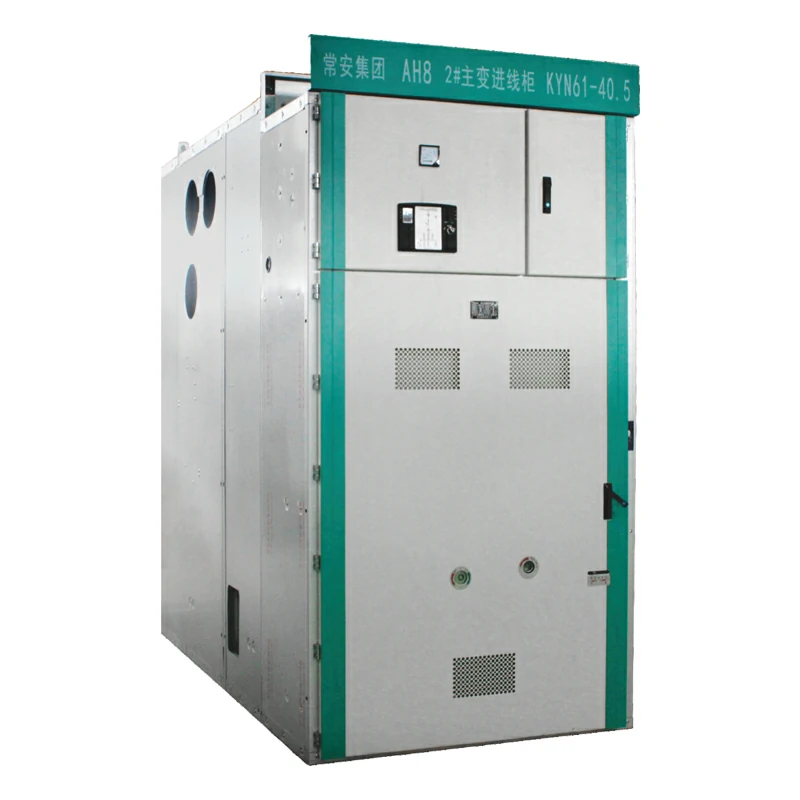
Chang'an Electric manufactures a range of medium-voltage switchgear designed for reliable power distribution. The KYN61-40.5 Metal-clad Movable Switchgear is one of their key products, designed for voltage ratings from 11kV to 36kV. Air insulated switchgear is a secondary power distribution device used in power distribution stations and compact substations in load centers such as residential areas, high-rise buildings, large public buildings, and factory enterprises. The company provides technical support and guidance for maintenance and repair, helping customers keep their switchgear operating safely.
Insulation failure in air insulated switchgear is preventable with regular inspection, cleaning, and testing. Start with visual checks for carbonized tracks, white powder, and cracks. Measure insulation resistance with a megohmmeter and track the readings over time. Clean with the right methods—dry cloth for light dust, isopropyl alcohol for contamination—and always dry thoroughly before re-energizing. Install anti-condensation heaters to prevent moisture problems before they start. And when cleaning isn’t enough, replace the affected insulators. With a systematic approach to maintenance, your AIS will provide years of reliable service.
Need help diagnosing insulation issues in your air insulated switchgear? Reach out to Chang'an Electric’s technical team—they can provide testing guidance, replacement parts, and retrofit solutions for anti-condensation heaters.