 English
 Pусский
 Español
Cast Resin Transformer vs Oil Filled – Which One for Indoor Use? (No Brand Comparison)

 by changan electric
You’re specifying a transformer for an indoor installation—a high-rise building, a hospital, or an industrial facility. The decision often comes down to two options: cast resin dry-type or oil immersed.
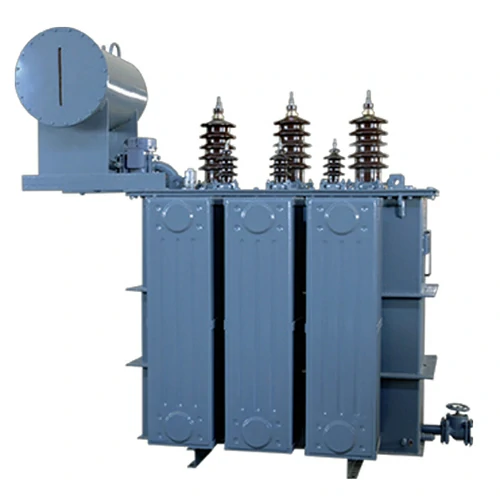
Both have their place, but the choice has real implications for fire safety, maintenance schedules, and where you can put the equipment. An Oil Immersed Transformer uses oil for cooling and insulation, making it highly efficient and thermally robust—but the liquid's flammability means it’s typically installed outdoors unless special precautions are taken.
This guide compares the two technologies across fire safety, installation flexibility, maintenance, environmental risk, noise, and overload capability—without brand bias—to help you make the right call for your indoor application.
Fire Safety – The Deciding Factor
Fire risk is the single biggest differentiator between the two transformer types, and often the deciding factor for indoor installations.
Cast Resin – Self-Extinguishing
Cast resin transformers contain no oil. The windings are encapsulated in epoxy resin, which is self-extinguishing and does not propagate flame. In the event of a fault, there’s no combustible liquid to fuel a fire. This is why cast resin transformers are the default choice for high-rise buildings, hospitals, schools, and other occupied spaces where fire safety is paramount.
Oil Filled – Requires Vault or Containment
Oil-filled transformers contain thousands of liters of combustible mineral oil. In the event of a fault, the oil can ignite and spread fire. For indoor installations, building codes typically require a fire-rated vault or containment system. Under NEC 450.23, oil-filled transformers installed indoors generally require vaults with specific fire-resistance ratings, pressure relief, and oil containment. Chang'an Electric’s oil immersed transformers are equipped with pressure relief valves and can be fitted with gas relays for alarm and trip functions, but the oil itself remains a fire hazard that must be contained.
The Code Reality
In most jurisdictions, cast resin transformers can be installed directly in electrical rooms without special fire suppression. Oil-filled transformers, by contrast, are often restricted to basements with dedicated vaults or are simply prohibited in high-rise buildings. If you’re working on a multi-story building, the decision is often made for you: cast resin is the only practical option.
Where Can Each Be Installed Indoors?
Fire safety drives location flexibility. Here’s where each type can go.
Cast Resin – Close to the Load
Cast resin transformers can be placed directly in electrical rooms, near the loads they serve. This reduces cable runs, voltage drop, and overall installation cost. They don’t require special containment, fire suppression, or ventilation beyond normal room cooling. For facilities where space is at a premium, this is a significant advantage.
Oil Filled – Restricted to Vaults or Dedicated Rooms
Oil-filled transformers are typically restricted to dedicated transformer rooms or vaults with fire-rated walls, floors, and ceilings. These rooms must have oil containment (a curb or pit to hold the full oil volume in case of a leak), pressure relief, and often automatic fire suppression. The space requirements are substantial, and the room must be isolated from occupied areas. Chang'an's oil immersed transformers are designed for indoor or outdoor installation, but indoor use requires careful attention to the installation environment.
Ventilation Requirements
Both types require ventilation to dissipate heat. Cast resin transformers rely on natural air circulation; oil-filled units use the oil to transfer heat to the tank surface, which then radiates to the surrounding air. However, oil-filled transformers in vaults also require ventilation for emergency oil vapor release—a requirement that adds complexity to the installation.
Maintenance – Frequency and Complexity
The maintenance burden is one of the most underappreciated differences between the two technologies.
Cast Resin – Minimal Maintenance
Cast resin transformers are essentially maintenance-free. The epoxy encapsulation protects the windings from moisture, dust, and contaminants. Routine maintenance is limited to visual inspection, cleaning of dust from the exterior, and checking connections. No oil testing, no filtration, no level monitoring. For facilities with limited maintenance staff, this is a major advantage.
Oil Filled – Ongoing Monitoring
Oil-filled transformers require regular maintenance: oil sampling and testing for dissolved gases, moisture content, and dielectric strength; oil level monitoring; leak checks; and periodic oil filtration or replacement. The oil degrades over time due to heat and oxidation, and moisture ingress is a constant concern. Chang'an’s oil immersed transformers use a fully sealed structure with vacuum oil filling to remove moisture and prevent oil aging, but even sealed units require periodic inspection. The maintenance burden is real and ongoing.
Lifetime Cost
Cast resin transformers have a higher initial cost but lower lifetime maintenance costs. Oil-filled units are less expensive upfront but incur ongoing oil testing, filtration, and eventual oil replacement costs. For a 20-30 year service life, the total cost of ownership may be similar—but the cost profile is very different.
Environmental and Spill Risk
Environmental considerations are increasingly important in transformer selection, especially for indoor installations where a spill could be catastrophic.
Cast Resin – No Oil, No Risk
Cast resin transformers contain no liquid. There is no risk of oil spills, groundwater contamination, or cleanup costs. This is a significant advantage in environmentally sensitive locations or buildings where a spill would be difficult to contain.
Oil Filled – Spill Containment Required
Oil-filled transformers contain mineral oil, which is not biodegradable and can contaminate soil and water. Indoor installations require secondary containment—a catch basin or vault floor designed to hold the full oil volume in case of a leak. Some manufacturers offer biodegradable natural ester fluids (vegetable-based oils), but these are more expensive and still require containment.
The Sealed Tank Advantage
Chang'an's oil immersed transformers feature a fully sealed structure with corrugated oil tanks that have no leakage. This design, combined with vacuum oil filling, prevents oil aging and moisture ingress. However, even a sealed tank can leak in the event of a fault, so containment is still required for indoor installations.
Noise Level – What to Expect
Noise is often overlooked but can be a critical factor in occupied buildings.
Cast Resin – 55-65 dBA
Cast resin transformers typically operate at 55-65 dBA, depending on the design and load. The epoxy encapsulation provides some damping, but the core still vibrates at twice the line frequency, producing audible hum.
Oil Filled – 3-5 dBA Quieter
Oil-filled transformers are generally 3-5 dBA quieter than equivalent cast resin units. The oil acts as a damping medium, absorbing some of the vibration from the core and windings. For noise-sensitive applications—hospitals, recording studios, residential buildings—this difference can be meaningful.
When Noise Matters
In a mechanical room isolated from occupied spaces, the noise difference is negligible. In a building where the transformer room is adjacent to offices or patient rooms, the 3-5 dBA difference may justify the additional fire protection requirements of an oil-filled unit. Chang'an's transformers comply with IEC 60076-10 for sound level determination, ensuring predictable acoustic performance.
Overload Capability
Overload capability can be the deciding factor in applications with high starting currents or variable loads.
Oil Filled – Higher Thermal Mass
Oil-filled transformers have significant thermal mass—the oil absorbs heat during overload conditions, allowing the transformer to sustain short-term overloads of 30-50% without exceeding temperature limits. This makes them ideal for applications with motor starting currents, welding loads, or other intermittent high-current demands.
Cast Resin – Lower Overload Tolerance
Cast resin transformers have lower thermal mass. The epoxy resin dissipates heat more slowly than oil, so overload capability is more limited. Typical cast resin units can handle 10-20% overload for short periods, but sustained overloads are not recommended.
Application Tip
For loads with high inrush currents or frequent starting—motors, compressors, large pumps—an oil-filled transformer may be the better choice. For steady, predictable loads, either type will perform adequately. Chang'an's S-35kV series oil immersed transformers feature high short-circuit withstand capability and strong mechanical strength, making them well-suited for demanding industrial applications.
| Factor | Cast Resin (Dry-Type) | Oil Immersed |
|---|---|---|
| Fire Safety | Self-extinguishing, no oil | Requires vault/containment |
| Installation Location | Any electrical room | Vault or dedicated room |
| Maintenance | Minimal (visual inspection) | Regular oil testing & monitoring |
| Environmental Risk | No spill risk | Spill containment required |
| Noise Level | 55-65 dBA | 3-5 dBA quieter |
| Overload Capability | Limited (10-20%) | High (30-50%) |
| Initial Cost | Higher | Lower |
Questions Facility Managers Ask
Can I use an oil filled transformer in a basement without a vault?
Generally, no. Most building codes require oil-filled transformers indoors to be installed in fire-rated vaults with oil containment, regardless of the floor level. The only exception is transformers filled with less-flammable fluids (like natural esters), which may have reduced requirements. Always check with the local authority having jurisdiction.
Which one is lighter for elevator transport?
Cast resin transformers are typically heavier than oil-filled units of the same rating because they use more copper and iron to compensate for the lower cooling efficiency. Oil-filled transformers have smaller cores and less copper because the oil provides better cooling. If elevator weight limits are a concern, oil-filled may be easier to transport to upper floors.
Does a cast resin transformer need fireproof coating?
No. Cast resin transformers are inherently fire-resistant and self-extinguishing. The epoxy encapsulation provides the fire protection. No additional coating is required.
Which one has better efficiency?
Both types can achieve high efficiency. Modern designs—both cast resin and oil-filled—can meet IE2, IE3, or even IE4 efficiency levels. The efficiency depends more on the specific design and materials than on the technology type. Chang'an's oil immersed transformers feature cold-rolled grain-oriented silicon steel cores with low no-load loss, contributing to high efficiency.
Making the Right Choice for Your Building
The decision between cast resin and oil immersed transformers comes down to your specific application.
Choose Cast Resin When
-
You’re installing in a multi-story building or occupied space
-
You have no tolerance for oil spill risk
-
You want minimal maintenance
-
You have a steady, predictable load
-
Fire code restricts oil-filled units
Choose Oil Immersed When
-
You have a dedicated transformer room or vault
-
You need high overload capability
-
Initial budget is tight
-
You’re in a basement or ground floor with containment
-
You have facilities staff for regular oil maintenance
Chang'an Electric manufactures oil immersed transformers designed for reliable power distribution. The S-35kV series is suitable for three-phase AC 50/60Hz, rated voltage 35kV distribution grids, playing an important role in high-voltage transmission and low-voltage power supply. Features include cold-rolled grain-oriented silicon steel cores for low no-load loss, fully sealed construction with vacuum oil filling to prevent oil aging, corrugated oil tanks for leak-free operation and efficient heat dissipation, and optional on-load tap changers for voltage regulation without power interruption. The product is widely used in power plants, substations, industrial and mining enterprises, ports, airports, and other locations.
The choice between cast resin and oil immersed transformers isn’t about which is better—it’s about which is better for your specific application. Fire safety, installation location, maintenance capacity, and load profile all point in one direction or the other. Use the guidance above to evaluate your options, and consult with a qualified engineer for your specific installation.
Need help choosing the right transformer for your indoor installation? Reach out to Chang'an Electric’s technical team—they can provide product specifications, application guidance, and installation recommendations based on your specific requirements.