 English
 Pусский
 Español
How does an EU type prefabricated substation fit everything into one metal box?

 by changan electric
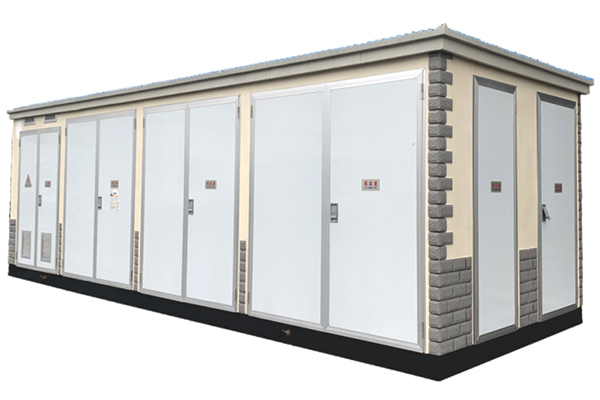
A utility needs a new substation in a crowded urban neighborhood. The traditional approach: pour a concrete foundation, build a brick building, bring in a crane to lower the transformer, then bring in switchgear cabinets separately. Weeks of construction. Months of permitting. The completed building sits on a plot of land that could have housed several apartments. The alternative: a single metal box delivered on a truck, set on a simple pad, and connected within days. That box contains a complete power distribution system. The EU type prefabricated substation replaces the Type III substation building with a compact, factory‑assembled enclosure, combining high‑voltage ring network switchgear, a transformer, low‑voltage capacitors, and low‑voltage switches in one weatherproof housing. The structure is equivalent to compactly installing the equipment of a Type III substation in a metal box, making the Type III substation miniaturized. An EU type prefabricated substation is not a transformer in a box; it is a complete secondary substation engineered for outdoor installation where space is at a premium. This article explains what is inside the three compartments, how the two incoming line configuration provides redundancy, and why the metal enclosure keeps noise and radiation within acceptable limits.
Three compartments, one enclosure: what lives inside the steel box
The EU type prefabricated substation is divided into three functional sections: the high‑voltage compartment, the transformer compartment, and the low‑voltage compartment. The HV compartment contains 10kV ring network switchgear, a critical component that allows multiple substations to be connected in a loop configuration for redundancy. The transformer compartment houses either a single or dual transformer, each rated between 500kVA and 800kVA. The LV compartment contains low‑voltage capacitors for power factor correction and low‑voltage switches for circuit protection and distribution.
The prefabricated substation includes a metal box that serves as the enclosure and foundation, welded steel frame structure, high‑voltage ring network switchgear, power transformer, low‑voltage power distribution panel, capacitors, meters and control wiring. The compact arrangement reduces the footprint to a fraction of what a conventional building would require. A single‑transformer unit has two 10kV incoming lines and typically 4‑6 outgoing low‑voltage cables. A dual‑transformer unit also has two 10kV incoming lines, but each transformer feeds its own set of outgoing cables, typically 8‑12 lines.
Single vs dual transformer: matching the configuration to the load
A single‑transformer EU type substation is suitable for a residential complex, a commercial center, or a small industrial facility where the load can be accommodated by one 500‑800kVA unit. The two incoming lines provide redundancy in case one line fails, but the transformer itself is a single point of failure. For a critical load such as a hospital or a data center, a dual‑transformer configuration is required. Each transformer is rated 500‑800kVA, and the two units can be operated in parallel or independently. If one transformer fails, the other can carry the essential load.
The choice of transformer type — oil‑immersed or dry‑type — affects the substation‘s location. Oil‑immersed transformers are less expensive and more efficient but require a spill containment basin. Dry‑type transformers are more expensive but can be installed indoors or in areas where oil leakage is not permitted. The EU type substation can be equipped with either, depending on the site requirements.
The transformer compartment is equipped with natural ventilation and, in some models, forced air cooling. The ventilation louvers are designed to prevent water ingress while allowing hot air to escape. The metal enclosure also acts as a noise barrier; EU type substations have noise levels comparable to Type III and Type I substations, lower than the open‑style American type substations because the transformers are enclosed in metal boxes that shield both noise and electromagnetic radiation. The metal shielding also reduces the electromagnetic field exposure to nearby pedestrians.
Fully enclosed metal housing: why the IP rating matters for outdoor installation
An outdoor substation must survive rain, snow, dust, and the occasional pressure wash from maintenance crews. The enclosure is built from high‑strength steel with a corrosion‑resistant coating, achieving an IP54 protection rating. IP54 means the enclosure is dust‑protected (level 5) and protected against splashing water from any direction (level 4). For a substation installed on a city sidewalk, IP54 ensures that road spray does not enter the HV compartment.
The metal housing also provides mechanical protection. A substation placed near a loading dock is subject to accidental impacts from trucks. The steel frame is designed to withstand a certain level of impact without damaging the internal equipment. The enclosure also keeps out small animals — rodents that could gnaw on cables are blocked by the sealed shell.
The enclosure is designed to meet IEC 62271‑202, the international standard for high‑voltage prefabricated substations up to 52kV. Compliance with this standard is a requirement for export to Europe and many other markets. The standard covers service conditions, rated characteristics, structural requirements, and test methods, including the temperature rise test, short‑circuit withstand test, and IP rating verification.
Why the metal housing reduces radiation more than concrete
The transformers in an EU type substation are placed inside a metal enclosure that acts as a Faraday cage. The metal walls reflect and absorb electromagnetic radiation, reducing the field strength outside the enclosure. American type substations often use a pad‑mounted design with a concrete or composite enclosure that offers less shielding effectiveness. For a substation located near a school or a residential area, the lower radiation of the EU type design is a significant advantage.
Where the YBM series fits in a power distribution network
The YBM EU type prefabricated compact substation is designed for the 10kV distribution grid, stepping down from medium voltage to low voltage for end users. Typical installation sites include:
-
Urban distribution networks: Underground feeding from a ring main unit in city centers
-
Residential complexes: Substation serving multiple buildings in a housing development
-
Commercial centers: Dedicated substation for a shopping mall or business park
-
Industrial plants: On‑site power distribution for factories with 10kV service
-
Renewable energy sites: Step‑up from inverter output to 10kV for grid connection
-
Airports and ports: Reliable power for runway lighting and cargo handling
-
Temporary power for construction sites: Deployable unit that can be moved as the project progresses
The substation can be equipped with power distribution automation, allowing remote monitoring and control. A substation with distribution automation can send alarms to a central control room when a door is opened, when the transformer temperature exceeds a threshold, or when a circuit breaker trips. For a utility managing hundreds of substations, the automation feature reduces the need for on‑site inspections.
How the EU type prefabricated substation compares to a conventional building
| Feature | Conventional Brick Substation | EU Type Prefabricated Substation |
|---|---|---|
| Construction time | 3‑6 months | 2‑4 weeks (factory built) |
| On‑site work | Concrete, masonry, electrical | Pad, cable connections |
| Land use | Permanent building footprint | Compact, can be relocated |
| Noise level | Low (brick absorbs sound) | Comparable (metal enclosure with sound insulation) |
| Security | Walls, doors, locks | Steel enclosure, tamper‑resistant locks |
| Expansion | Difficult, requires additional building | Replace with larger unit or add second box |
An EU type prefabricated substation can be delivered and installed in less than a month from order, compared to six months or more for a conventional building. The substation comes pre‑assembled, pre‑wired, and factory‑tested, so the on‑site work is limited to setting the unit on its pad and connecting the incoming and outgoing cables. For a developer who needs power quickly, the prefabricated substation is the faster path to energization.
How the YBM EU type prefabricated compact substation fits into a utility‘s asset portfolio
Changan Electric manufactures the YBM series EU type prefabricated substation for distribution utilities, industrial plants, renewable energy developers, and commercial property owners. The substation is built to IEC 62271‑202, with an IP54 steel enclosure, HV ring network switchgear with two incoming lines, single or dual transformer configuration (500‑800kVA per transformer), LV compartment with capacitors and circuit breakers, and 4‑12 outgoing cables depending on configuration. The unit is designed for outdoor installation on a concrete pad, with top‑entry or bottom‑entry cable access.
An EU type prefabricated substation that arrives ready to connect cuts construction time, reduces on‑site labor, and occupies a fraction of the land of a conventional building. For a utility facing increasing demand in a dense urban area, the YBM series delivers the compact footprint, factory‑built quality, and IEC compliance that a modern grid requires.
【Request a quote from Changan Electric】
Contact Changan with your required transformer capacity (500‑800kVA per unit), configuration (single or dual transformer), and automation requirements to receive a YBM series substation specification and a factory assembly video.